Last week, I watched an AI-powered trading assistant tell a user "Happy Sunday, markets are closed today" on a Tuesday morning. The user missed a profitable trade window because they trusted the AI without double-checking.
This wasn't a one-off glitch. Search Twitter for "AI wrong day" and you'll find hundreds of examples: chatbots scheduling Monday meetings on Sundays, AI assistants miscalculating deadlines, and trading bots making decisions based on outdated temporal context.
Your AI has absolutely no idea what time it is right now. If you're using AI for anything time-sensitive — trading, scheduling, market analysis — this blind spot is costing you real money. And it's not getting fixed anytime soon.
Why This Happens
This isn't a bug. It's not something OpenAI or Anthropic will patch next quarter. It's baked into how large language models work at a fundamental level.
Problem 1: Training Data Has an Expiration Date
Every AI model has a knowledge cutoff—the date where its training data ends. GPT-4 was trained through April 2023. Claude's cutoff is early 2025. When you ask these models about "current events" or "today's date," they're pulling from a frozen snapshot of the world.
The model doesn't know it's 2026. It literally thinks it's still living in its training window. When it says "this week" or "yesterday," it's hallucinating based on patterns, not checking any clock.
For traders, this is a dealbreaker. Ask an AI "Should I trade today?" and it has zero idea if today is Saturday or Tuesday. It can only guess from conversational cues. And it will guess with full confidence, even when it's dead wrong.
Problem 2: Nobody Gives It the Time
Unlike your phone or laptop, AI doesn't check a system clock. Think about how a typical interaction works. You type something, hit send, get a response. At no point does the AI receive the current date, the day of week, your time zone, or whether markets are open. None of that is part of the conversation unless you or a system explicitly puts it there.
The AI is operating in a temporal vacuum. It's like asking someone locked in a windowless room for three years what day it is. Educated guesses at best.

Problem 3: Most Useful Questions Depend on Time
"What's happening this week in markets?" depends on which week. "How many days until my options expire?" requires knowing today's date. "Is the market open?" needs the current time and day. "What did the Fed announce yesterday?" — yesterday is a moving target.
Without a timestamp, the AI just pattern-matches from similar questions it saw during training. Sometimes it gets lucky. Often it doesn't. And it sounds equally confident either way.
Problem 4: "Just Give It the Time" Isn't Enough
You might think: add a timestamp, problem solved.
Not that simple. Real time awareness requires:
Temporal reasoning — knowing "3 days ago" from Feb 11 means Feb 8
Context persistence — holding the verified time across an entire conversation
Staleness detection — recognizing when a session has gone on so long the time context expired
Verification — actually checking claims instead of hallucinating
An AI can be told the current time and still botch every date calculation in the response. This is an architecture problem, not a prompt engineering trick.
Real-World Impact: This Is Costing People Money
Trade This Systematically
Stop reading. Start executing.
Join 500+ traders using YMI's automated bots, daily KPLs, and AI trade plans, no guesswork required.
Brand Damage
Your customer service bot tells clients "We'll respond by end of day Friday" on a Saturday. Your social media AI drops "Happy Monday motivation!" on Wednesday. These aren't small mistakes—they signal to your customers that nobody's actually paying attention.
One temporal error can undo months of brand building.
Trading Disasters
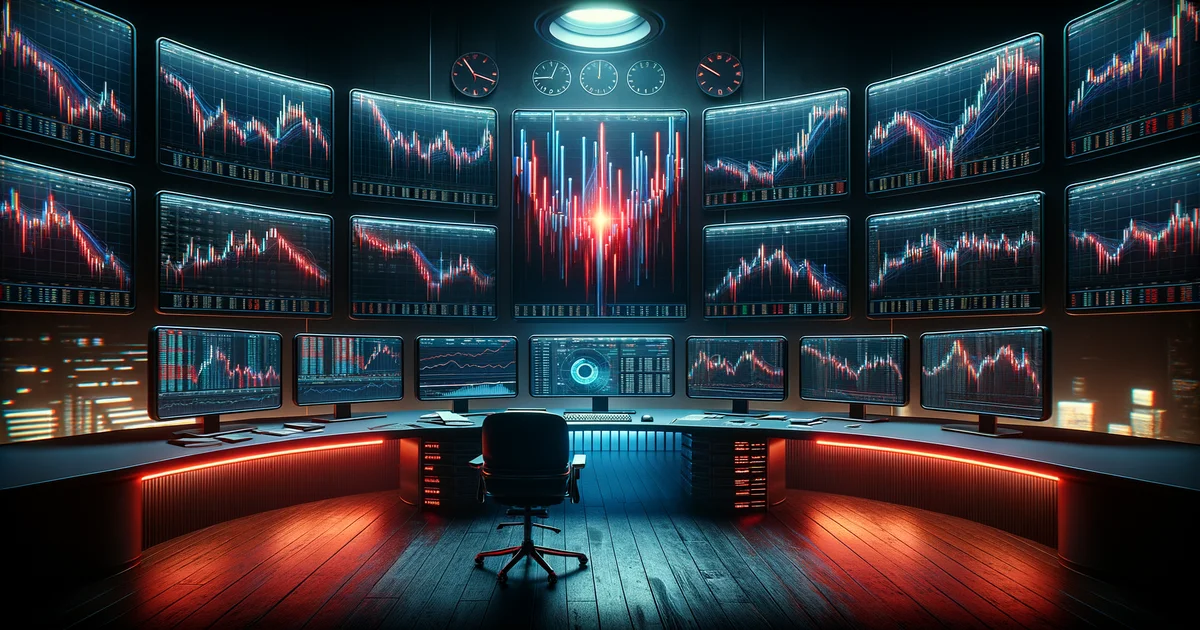
For algorithmic traders and anyone using AI near their trading workflow, temporal errors are expensive:
- Wrong market hours — AI suggests trades when markets are closed
- Missed expirations — Options expiration dates calculated incorrectly
- Day-of-week errors — Weekday strategies running on weekends
- Stale data assumptions — Analysis based on "yesterday's close" using week-old data
I've personally seen traders lose thousands because their AI assistant confidently gave outdated information about trading hours or settlement dates. The AI wasn't lying—it genuinely didn't know what day it was.
Operations Chaos
If you're using AI to manage calendars, deadlines, or project timelines, temporal blindness creates chaos. Meetings get scheduled on weekends. Deadline calculations land off by days. "Next Monday" ends up on the wrong week. "In 3 business days" ignores holidays entirely.
One founder told me his AI assistant scheduled a critical investor call for Sunday afternoon. The investors weren't impressed.
The Fix: Architecture, Not Documentation
After dealing with these problems in my own trading systems, I stopped trying to fix it with better prompts. Instead, I built a system that makes temporal errors structurally impossible.
Fix 1: Automatic Time Injection
Every AI session in my system starts with verified time context injected directly into the prompt before the AI sees anything else:
⏰ TIME VERIFIED: 11:40 AM CST on Wednesday, February 11, 2026
Day: Wednesday (weekday)
Market Status: US markets open
This isn't optional. It's not something the AI can forget to check. The system injects it automatically, every single time. The AI doesn't get a choice.
Fix 2: Response Verification Layer
But even with time context, AI will still make temporal mistakes. Giving it the clock doesn't mean it can do calendar math.
So I built a verification layer that scans every AI response for temporal claims — day-of-week references, relative dates like "yesterday" or "next week," time calculations, market status. If any of those claims are wrong, the response gets blocked before it reaches the user. The AI sees an error and has to regenerate with correct information.
You don't fix this by training better models. You fix it by not trusting them with time-critical logic in the first place.

Fix 3: Session Staleness Management
Time context goes stale. A session that starts at 9 AM might still be running at 11 PM — that's a different day, different market status, completely different "today." If you injected the time once at the start and never refreshed it, you're back to square one.
My system monitors session duration, re-verifies after extended pauses, and forces a refresh when the session crosses a day boundary. Time isn't a static string in a prompt. It's a variable with its own lifecycle.
What You Can Do About It
You don't need to build what I built. You just need to stop being lazy with your prompts.
Instead of typing "Should I trade today?" — type "Today is Wednesday, February 11, 2026, 11:40 AM EST. Should I trade today?" Five extra seconds. That's all it takes. The AI can only work with what you give it, so give it the time.
If you're asking time-sensitive questions regularly, save a template that auto-fills the date. Most AI tools support this. Set it up once and forget about it.
Today is [CURRENT_DATE] at [CURRENT_TIME].
Day of week: [DAY_OF_WEEK]
US markets: [OPEN/CLOSED]
[YOUR QUESTION]
And when AI gives you any statement about a date, a day, or a deadline — verify it. Check the calendar. Do the math yourself. Confirm market hours from the actual exchange website. It does not matter how confident the response sounds. Confidence and accuracy are completely unrelated in language models.

For high-stakes decisions — trading, compliance, investor deadlines — treat every AI output as a first draft that needs human sign-off. That one habit will save you more money than any model upgrade ever will.
The Real Point
This isn't just about time. It's about a mindset shift in how you use AI.
Most people document that AI might make mistakes and hope someone reads the warning. That doesn't work. What works is building systems that make the mistakes impossible in the first place. Don't hope the AI follows your rules — enforce them. Don't trust it to remember context — inject it every time. Don't expect it to catch its own errors — build the catch into the system.
AI is incredibly powerful. But it's a tool. A chainsaw doesn't know where to cut — you do. The people winning with AI right now aren't the ones using the fanciest models. They're the ones with the best engineering wrapped around those models.
Your AI has no idea what time it is. Now you know why, and you know how to fix it. The only question is whether you'll actually do it, or keep trusting the confident-sounding answer.
About the Author

Founder, Young Money Investments · Quant Trader
Cameron trades ES, NQ, and futures across multiple market cycles. He founded Young Money Investments to teach systematic, data-driven trading and manages Magnum Opus Capital. His work emphasizes documented rules, risk controls, and review over outcome promises.
Free, No Credit Card
Get Daily KPLs in Your Inbox
AI-generated Key Price Levels for ES & NQ, delivered every trading morning. Join 500+ traders who start their session with a plan.
Risk Disclosure & Disclaimer
Educational Purposes Only: The content provided in this blog is for educational and informational purposes only. It does not constitute financial, investment, or trading advice. Young Money Investments is not a registered investment advisor, broker-dealer, or financial analyst.
Risk Warning: Trading futures, forex, stocks, and cryptocurrencies involves a substantial risk of loss and is not suitable for every investor. The valuation of futures, stocks, and options may fluctuate, and as a result, clients may lose more than their original investment.
CFTC Rule 4.41 - Hypothetical or Simulated Performance Results: Certain results (including backtests mentioned in these articles) are hypothetical. Hypothetical performance results have many inherent limitations. No representation is being made that any account will or is likely to achieve profits or losses similar to those shown. In fact, there are frequently sharp differences between hypothetical performance results and the actual results subsequently achieved by any particular trading program.
Testimonials: Testimonials appearing on this website may not be representative of other clients or customers and is not a guarantee of future performance or success.